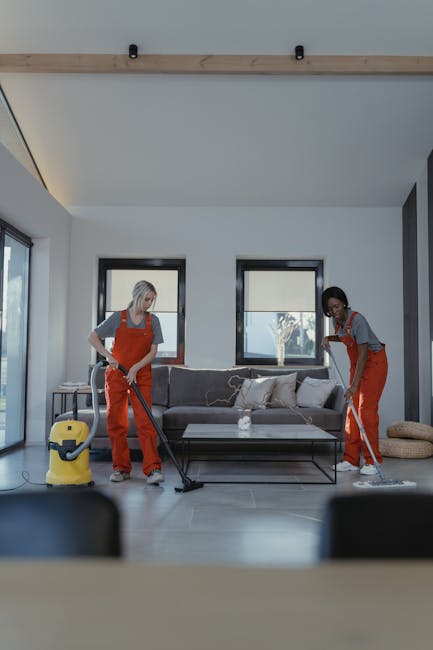
How to check certified cleaning company credentials
Hiring a cleaning company should make life easier, not add another layer of worry. But let's face it, a polished quote and a friendly voice on the phone do not tell you whether the company is properly insured, trained, vetted, or even operating with the right paperwork in place. If you are wondering how to check certified cleaning company credentials, this guide walks you through the process in plain English, with a UK-focused eye on what actually matters in the real world.
Whether you are booking a one-off deep clean, arranging regular domestic help, or comparing providers for a business property, knowing how to verify a cleaner's credentials helps you avoid avoidable mistakes. You will learn what to ask for, what documents to look for, how to spot vague answers, and when a company's website can help you judge trustworthiness. A bit of due diligence now can save a headache later. Probably a few, if we are honest.
Table of Contents
- Why checking cleaning company credentials matters
- How credential checking works in practice
- Key benefits and practical advantages
- Who needs this and when it makes sense
- Step-by-step guidance
- Expert tips for better results
- Common mistakes to avoid
- Tools, resources and recommendations
- Law, compliance, standards, or best practice
- Options, methods, or comparison table
- Case study or real-world example
- Practical checklist
- Conclusion
- Frequently asked questions
Why How to check certified cleaning company credentials Matters
Cleaning work can look straightforward from the outside, but it often involves access to homes, offices, keys, private spaces, fragile surfaces, electrical appliances, and occasionally expensive items. That means trust matters. A lot.
Checking credentials is not just about finding a logo or a certificate on a website. It is about confirming that the company is set up to do the work safely, legally, and professionally. In a London flat, for example, you might be leaving someone with access to shared entrances, concierge areas, or a resident parking bay. In an office, you may be dealing with after-hours access, confidential paperwork, and health-and-safety obligations. Different setting, same basic truth: if a company cannot clearly explain who they are and how they operate, you should slow down.
There is also a bigger business reason. Properly checked cleaning companies are less likely to disappear mid-job, underquote, cut corners, or create insurance problems if something goes wrong. You do not need to become a detective. You do need to ask a few pointed questions and expect straight answers.
Expert summary: A genuine professional cleaning company should be able to show proof of identity, insurance, trading details, staff checks where relevant, and a clear complaints process without sounding defensive. Confidence is good; vagueness is not.
How How to check certified cleaning company credentials Works
Credential checking works by moving from the visible to the verifiable. Anyone can say they are certified. The real question is whether the company can back that up with evidence that matches the service you need.
In practice, you are looking at five broad areas:
- Trading identity - who the company is, where it is based, and how it is legally set up.
- Insurance cover - whether the company has public liability insurance, employers' liability insurance where staff are employed, and any additional cover relevant to specialist cleaning.
- Training and competence - whether staff are trained for the actual work they will carry out, such as carpet cleaning, oven cleaning, or working at height.
- Policies and procedures - health and safety, complaints handling, privacy, payment security, and what happens if damage occurs.
- Consistency of information - whether the quote, website, and written communications all match up.
To be fair, not every cleaning job needs the same level of scrutiny. A small domestic clean is different from a large office contract or a tenancy turnaround with strict move-out deadlines. But the method is similar: ask for evidence, compare it against the service offered, and check whether the answers make sense.
You should also distinguish between certified, insured, and experienced. Those are not the same thing. A company can have ten years of experience and still be missing key paperwork. Likewise, a logo on a website does not always prove active certification. Ask what the certification covers, who issued it, and whether it still applies to the current business.
Key Benefits and Practical Advantages
Checking credentials gives you more than peace of mind, although that alone is worth a fair bit. It can also protect your money, your property, and your time.
| Benefit | What it means in practice | Why it matters |
|---|---|---|
| Lower risk | You reduce the chance of uninsured damage, missed appointments, or poor workmanship. | Problems are easier to resolve when the company is set up properly. |
| Better accountability | Registered details and written policies make it easier to follow up if something goes wrong. | You are not chasing a mobile number that stops being answered on Friday afternoon. |
| Safer access | Training, vetting, and safety processes help protect people and property. | Especially important for offices, HMOs, and homes with children or vulnerable adults. |
| Clearer value comparison | You can compare like with like rather than just looking at the cheapest quote. | Cheap and trustworthy are not always the same word, sadly. |
| More reliable service | Properly organised companies usually have booking, supervision, and complaints systems. | That tends to mean fewer surprises on the day. |
There is another practical advantage people forget: it helps you ask better questions. Once you know what proof to request, your conversation changes. You stop sounding unsure and start sounding informed. That alone tends to improve the quality of the responses you get.
Who This Is For and When It Makes Sense
This process is useful for almost anyone hiring cleaning services, but some people should be extra careful.
- Homeowners and tenants booking domestic cleaning, deep cleaning, or end of tenancy cleaning.
- Landlords and letting agents who need reliable turnaround work between occupants.
- Office managers and facilities teams arranging regular office cleaning or specialist cleans.
- People with high-value items such as rugs, sofas, hard floors, or delicate finishes.
- Anyone booking access-based work where cleaners may need keys, alarm codes, or out-of-hours entry.
- Customers comparing several providers and trying to decide who is genuinely professional.
It makes even more sense when the work is specialist. For example, carpet cleaning, upholstery cleaning, facade cleaning, or after builders cleaning can involve equipment, chemicals, or techniques that need proper handling. If someone is scrubbing away at a kitchen floor in a hurry, maybe that is fine. If they are using extraction machinery on a wool carpet in a rented flat, you want confidence that they know what they are doing.
And if you are only booking a one-off clean? Still check. One-off jobs are often where people become relaxed too quickly. That is usually when mistakes happen.
Step-by-Step Guidance
Here is a practical way to check a certified cleaning company's credentials without turning it into a week-long project.
1. Confirm the company identity
Start with the basics. Check the company name, website, trading address, phone number, and email. These details should appear consistently across pages, quotes, and invoices. If the name changes slightly from one place to another, ask why. Honest mistakes happen. Repeated inconsistency is different.
2. Ask what "certified" actually means
Do not assume the word means the same thing across every company. Ask which certification, training, or membership they are referring to, and what it covers. A company might mean staff training, product handling, safety processes, or a specific industry qualification. The point is not to chase jargon. The point is to understand it.
3. Request insurance evidence
Ask for proof of relevant insurance. For many customers, public liability insurance is the first thing to check. If the business employs staff, employers' liability insurance is also highly relevant. If the service involves specialist work, ask whether the cover fits that service. A carpet cleaner and a general house cleaner do not always need the same setup.
4. Check health and safety information
A serious company should have a written health and safety policy or be able to explain its approach clearly. This matters more than people think, especially for offices, shared buildings, or jobs involving equipment, slip risks, chemicals, or ladders. If they brush the question off, that tells you something.
5. Look at how staff are selected and trained
Ask whether staff are employed or self-employed, whether they are DBS-checked where relevant, and how induction or supervision works. Not every cleaning role requires the same level of vetting, but companies should be able to explain their process plainly. A clean answer, if you will.
6. Review complaints and problem-resolution procedures
Trusted businesses usually have a complaints procedure. That tells you they expect to resolve issues professionally rather than argue by text message. See whether they explain how to report damage, what happens next, and who handles follow-up.
7. Compare the quote against the promise
Read the quote carefully. Does it match the service described on the website? Are materials included? Is there a minimum booking duration? Are there exclusions? This is where people often spot the gap between marketing language and actual service.
8. Test responsiveness
Send a simple follow-up question. For example: "Can you confirm your insurance and the type of certification your team holds?" A reliable company answers clearly and without drama. Slow replies are not always a red flag, but evasive replies usually are.
9. Keep everything in writing
Before the job starts, keep the quote, service scope, date, and any special instructions in writing. That helps if there is a disagreement later. It is not about being difficult. It is about being organised.
10. Re-check before repeat bookings
If you plan to use the same company again months later, do not assume everything is still current. Insurance renews, staff change, and policies evolve. A quick recheck takes very little time and can save a lot of grief.
Expert Tips for Better Results
After years of comparing service providers, one pattern stands out: the best companies answer detailed questions without getting flustered. That is usually the easiest sign to trust.
- Ask for service-specific proof, not generic reassurance. "We are fully certified" sounds fine, but what exactly is certified?
- Check consistency across touchpoints. Website, quote, invoice, and email signature should tell the same story.
- Pay attention to how they explain things. A professional company can talk about insurance, risk, and methods in plain language.
- Notice whether they mention limitations. Good firms are honest about what they do not cover, which is actually reassuring.
- Use the first call as a test. You do not need to interview them for an hour. A five-minute call can reveal a lot.
One small but useful tip: ask what happens if the team arrives and the property is different from what was described. A proper provider will explain how they handle changes in room size, access, parking, or the condition of surfaces. That kind of detail is boring until it suddenly is not.
And yes, sometimes the person taking your booking is lovely but the paperwork is a mess. That happens. Charming is nice. Structured is better.
Common Mistakes to Avoid
People often make the same few mistakes when checking cleaning company credentials. Most are understandable. They are still worth avoiding.
- Assuming a website badge proves everything. Logos can be copied. Ask for the details behind them.
- Only comparing on price. A low quote without insurance or clarity can become expensive very quickly.
- Not checking what the service actually includes. A "deep clean" may mean different things to different companies.
- Ignoring vague answers. If someone keeps sidestepping a simple question, trust your instincts.
- Forgetting to ask about damage procedures. It feels awkward, but it matters.
- Skipping written confirmation. Verbal promises are easy to misunderstand.
- Assuming all cleaners need the same checks. Specialist work, office access, and domestic cleaning each carry different risks.
One especially common mistake is thinking that a friendly recommendation is enough on its own. Recommendations are useful, absolutely. But even a well-liked cleaner should still be checked properly. People can be excellent and under-documented at the same time. Humans, eh.
Tools, Resources and Recommendations
You do not need fancy software to check credentials. A notebook, a phone call, and a little discipline usually do the job. Still, there are a few practical ways to stay organised.
- Use a simple comparison table for insurance, services, response time, and written policies.
- Save quotes in one folder so you can compare apples with apples.
- Keep screenshots of important website claims before you book, just in case wording changes later.
- Check the company's policy pages if they provide them, especially about payments, complaints, privacy, and safety.
- Ask for service references in a similar property type if the job is specialist or high value.
If you are looking for more context on service types, it can help to review a company's broader cleaning pages so you understand what they actually do. For example, a business that offers deep cleaning, end of tenancy cleaning, and office cleaning may have different processes for each. That matters because the standards and risks are not identical.
If you are dealing with carpets, sofas, or specialist fabrics, it can also help to look at the provider's approach to carpet cleaning or upholstery cleaning. The service page should give you a sense of whether they talk about method, care, and limitations clearly.
Law, Compliance, Standards, or Best Practice
When you are checking cleaning company credentials in the UK, you are not just looking for a neat sales pitch. You are also checking whether the business follows normal legal and professional expectations.
At a minimum, you should expect the company to be able to explain its insurance cover, safety practices, and how it handles customer data, payments, and complaints. If staff are employed, employers' liability insurance is generally relevant. If the company works in occupied homes or offices, public liability insurance is especially important. If the job involves ladders, machinery, chemicals, or work at height, then the safety conversation becomes even more important.
Best practice also includes clear terms and conditions, a transparent complaints procedure, and sensible privacy handling. If a company collects your address, access instructions, phone number, or payment details, it should be able to explain how that information is protected. If you want to see how a provider sets out those basics, it is often worth reading their health and safety policy and privacy policy.
In some cases, you may also want to check how the company approaches sustainability, waste, or specialist disposal. That is not always legally central to a domestic clean, but it can be a useful sign of an organised business. A company that thinks carefully about its recycling and sustainability practices often tends to think carefully about other parts of service delivery too. Not always, but often enough to notice.
For customers in London, local service logistics matter as well. Access restrictions, parking, building rules, and time windows can all affect the job. A provider working in busy central areas such as London should be able to talk sensibly about those practical realities without making them sound like an afterthought.
Options, Methods, or Comparison Table
There is more than one way to check credentials. The best method depends on how large or risky the booking is. For a small domestic job, a quick document check may be enough. For a contract clean, you will want something much more structured.
| Method | Best for | Strengths | Limitations |
|---|---|---|---|
| Website review | Initial screening | Fast, easy, gives a first impression | Not enough on its own |
| Document request | Insurance and legal checks | Direct evidence, easy to store | Depends on the documents being current |
| Phone verification | Clarifying unclear claims | Lets you judge confidence and knowledge | Not always recorded unless you take notes |
| Written quotation review | Comparing services | Shows scope, exclusions, and pricing structure | Needs careful reading |
| Reference or case-history review | Specialist or larger jobs | Builds trust and context | May not be available for every small provider |
Here is the practical rule: the more complex the job, the more evidence you should gather. If the company will be cleaning a property every week, entering an office after hours, or handling specialist fabric treatments, use more than one method. A quick website glance is not enough. And really, you probably knew that already.
Case Study or Real-World Example
Imagine you are a landlord in south London arranging an end of tenancy clean between occupiers. The flat needs carpets cleaned, the oven restored, and the bathroom brought back to a presentable standard before check-in. On the surface, three companies look similar. Their websites all sound polished. Their prices are close enough.
The first company gives you a quote but cannot explain what their "certified team" means. They say, "it's all standard," and move on. The second company sends over insurance details, explains which parts of the job are included, and confirms how they handle damage claims and access arrangements. The third company is somewhere in the middle, but replies slowly and keeps changing the scope.
In that situation, the safer choice is usually obvious. The second company has shown you more than marketing. They have shown process. That matters when the handover deadline is tight and the tenant is due out by 10 a.m. on Friday. Nobody wants to be standing in a half-clean kitchen while the next move-in slot is already looming.
We have seen similar patterns in domestic bookings too. A homeowner in west London might assume all carpet cleaners are the same until a provider turns up without the right equipment for stair runners, or cannot explain what cleaning solution they use on a delicate rug. The best companies tend to be the ones that answer practical questions calmly: what they will do, what they will not do, and what happens if the material reacts badly.
That sort of clarity is not flashy. But it is reliable. And in this business, reliable wins.
Practical Checklist
Use this checklist before you book. It keeps things simple.
- Confirm the full company name and trading details.
- Ask what "certified" means in their case.
- Request proof of relevant insurance.
- Check whether staff are trained for the specific service.
- Review health and safety information.
- Look for a complaints procedure or issue-resolution process.
- Read the quote carefully for exclusions and extras.
- Make sure the scope of work matches your needs.
- Ask how access, parking, and timing will be handled.
- Keep all important details in writing.
- Re-check credentials for repeat or ongoing bookings.
If you want a quick decision aid, ask yourself one question: Would I feel comfortable handing over my keys, my time, and my trust to this company based on what they have shown me? If the answer is hesitant, pause.
Conclusion
Knowing how to check certified cleaning company credentials is really about reducing uncertainty. You are not trying to be difficult, and you are not looking for perfection. You are simply asking whether the company is properly set up to do the work safely, professionally, and consistently.
In practice, the best checks are simple: confirm identity, verify insurance, understand what the certification means, review policies, and compare the service against the promise. That is enough for most jobs, and a little more for specialist or higher-risk work. The clearer the answers, the easier your decision becomes.
If you have ever felt unsure after a quote that sounded a bit too smooth, that feeling is worth listening to. Good cleaning companies welcome sensible questions. They do not mind being checked. In fact, the better ones often respect you more for it.
Get a free quote today and see how much you can save.
Choose carefully, ask plainly, and trust the companies that make transparency feel easy. That is usually where the good service begins.
Frequently Asked Questions
What does certified mean for a cleaning company?
It usually means the company claims some form of training, membership, qualification, or formal recognition. The important part is not the word itself, but what proof sits behind it. Ask who issued the certification, what it covers, and whether it is current.
How do I know if a cleaning company is insured?
Ask for evidence of public liability insurance and, if relevant, employers' liability insurance. A trustworthy company should be able to provide this without hesitation. You do not need every policy detail, but you do need confirmation that the cover exists and is valid.
Should I check credentials for a one-off clean?
Yes, especially if the property is large, the work is specialist, or the company will have access to your home or office. A one-off booking can still involve damage, access issues, or poor workmanship, so a quick check is worth it.
What is the difference between insurance and certification?
Insurance protects against certain losses if something goes wrong. Certification usually relates to training, standards, or competence. A company can have one without the other, so ideally you want both.
How can I tell if a cleaning company's website claims are genuine?
Look for consistency. The company name, contact details, service descriptions, and policies should all line up. If the language is very vague or the same claim appears everywhere without detail, ask follow-up questions.
Do domestic cleaners need the same checks as office cleaners?
Not always the same ones, but the same logic applies. Office cleaning often involves stricter access, safety, and confidentiality considerations. Domestic cleaning may focus more on insurance, trust, and service clarity. The exact checks should fit the job.
What should I ask before booking a cleaning company?
Ask about insurance, certification, staff training, what is included in the price, how complaints are handled, and what happens if damage occurs. If the job is specialist, ask how they clean the specific material or area.
Are online reviews enough to trust a cleaning company?
Reviews are helpful, but they should not be your only check. They show other customers' experiences, which is useful, but they do not replace proof of insurance, written policies, or a clear explanation of the service.
What documents should a professional cleaning company be able to show?
Common documents include insurance proof, terms and conditions, a complaints procedure, a health and safety policy, and a written quote. For some jobs, you may also want staff training details or information about cleaning methods.
How do I compare two cleaning companies fairly?
Compare the same things for both: scope of work, insurance, clarity of communication, response time, written policies, exclusions, and price. If one quote is cheaper but less clear, that is not automatically better. It may just be less complete.
What are the biggest red flags when checking credentials?
Vague answers, changing company names, refusal to provide insurance evidence, no written quote, and inconsistent contact details are all warning signs. One odd issue may be harmless. Several together usually are not.
Do I need to check credentials again for repeat bookings?
Yes, at least occasionally. Insurance expires, policies change, and staff move on. A quick recheck before a new contract or a long gap between bookings is a sensible habit.
Can I ask a cleaning company about their complaints procedure?
Absolutely. In fact, you should. A company that explains how it handles problems is usually more organised than one that avoids the subject. It is a good sign when they can talk through the process calmly.
Is it rude to ask for proof of insurance or certification?
Not at all. Professional companies expect it. You are hiring a service, not taking a gamble. The good ones will usually appreciate that you care about doing things properly.